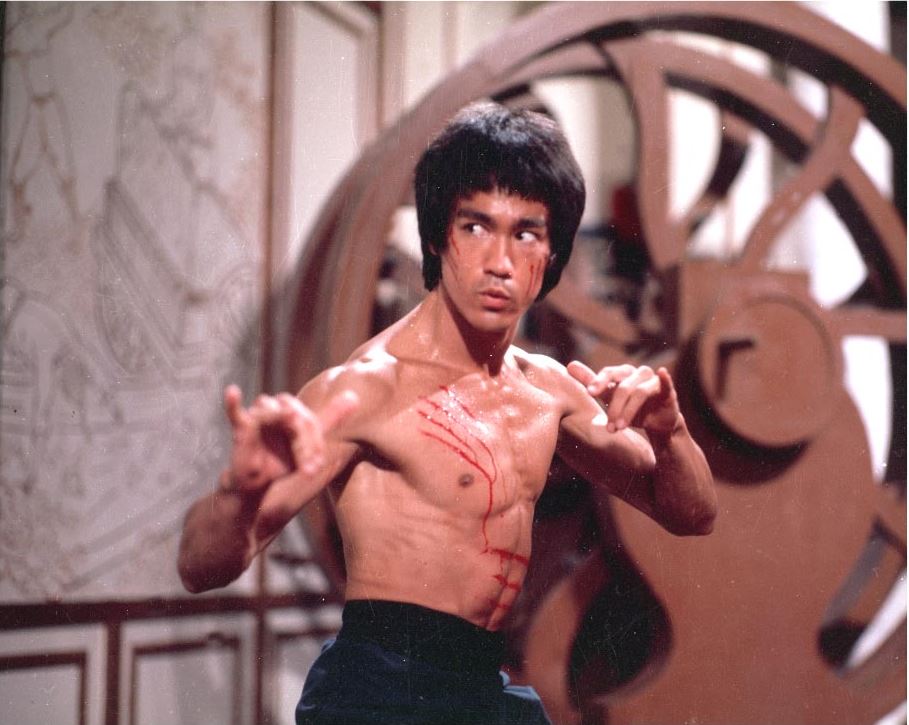
Enter the Dragon is the brainchild of the Legend Bruce Lee, who is known for his extraordinary skill and charisma in martial arts movies which took the world by the storms in the 1950-70s. By the time “Enter The Dragon” was released, the western world had already developed the ‘Kung-Fu craze’ as explained by David Desser and Poshek Fu in their book “The Cinema of Hong Kong: History, Arts, Identity”. This movie falls into the container of various genres and consists of various other elements within the Kung-Fu movie formula which caught the attention of western audiences both America and Europe, who familiarized these features as borrowed from contemporary ‘Bond 007’ films and television action-adventure series such as ‘Kung Fu’ on ABC between 1972-75
The influence of other genres and other contemporary movies can be spotted at different levels inside the movie. The most obvious is the American and the Caucasian ethnic group practising martial arts and also being a master at it. The character of Williams, an African American, is a straight citation to the “Blaxploitation” trend which many movie of the 1970 endeavoured to revive the image of the African American community within the United States. His Afro hairstyle and super cool attitude is a compliment to his panache and his fighting skills.
The character of Roper is the extravagant version of the white American, whose gambling and prodigal attitude is even shown as a dashing to the audiences. Seeing this character practising martial arts, at first may seems surprising and might even catch you off guard.
“Enter The Dragon” is the first martial arts film produced by a Hollywood Studio and shot amidst the beauty of mythical Hong Kong. Even though the movies narrative might feel like some fable, it has steady traces of westernization or particularly capitalization within it. The central thematic approach to this movie is Bruce Lee representing the United States government as a spy who has to uproot the villainous Han’s empire. Han’s island is a whimsical location covered in jungle and massive palaces which represent the empirical China but underneath those are a giant underground nest filled with drugs and drugged women, slaves in cages, exotic fighting equipment and experimental labs; suddenly from a beautiful Hong Kong to a movie set which represent the ‘Rambo’ and ‘Bond’ films.
As I was watching this film the first thing that caught my attention was the soundtrack which is very much western in its origin and has similarities with the action films of the west, mainly the Hollywood ‘James Bond’ franchise. Lalo Schifrin’s soundtracks blends the Far Eastern tones and rhythms with western background music, recalling from his previous composition the television series ‘Mission Impossible’ or the movie Dirty Harry(1971).
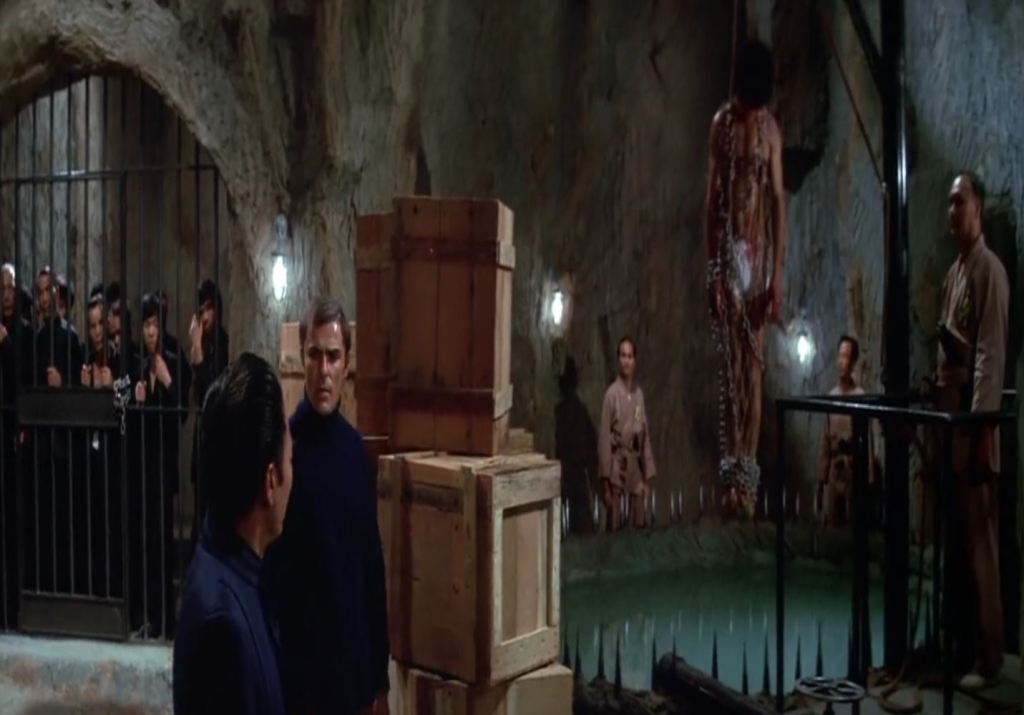
The Director Robert Clouse does a tolerable job exhibiting the film’s many fight with nifty visuals ideas. Still the film has deficiencies of any directorial touch rather it is Bruce Lee whose auteurist touch takes the film to whole new level. The way the fight scenes are choreographed justify his talent and his place among the legends of the martial arts film. Sudden and steady of Point-of-View shots makes us dive deep into the characters as they are experiencing the fight, the realistic hand to hand combat and also the use of body as weapon makes us go gaga over the fighting techniques of Bruce Lee. The fight scenes, choreographed by Lee himself, are anticipated parts where the movie shines while still being a bag full of cliché’s, at every closure we know what’s going to happen next but it is the charismatic fighting scenes which keep us digging out popcorns.
Although many other films of this genre have the lead character first defeated and then after rigorous training achieving victory, ‘Enter The Dragons’ first spoken lines congratulate Lee on his talents going beyond the mere physical realm and from there the film build him into a veritable angel of death. In the fight between O’hara and Lee, we keep on wondering why such an angelic and godly character exterminate two persons instead of forgiving them but this is where this movie gets separated from other martial arts movie which build on the theme of vengeance and avenge of the death of a family member which is very much Chinese in its nature.
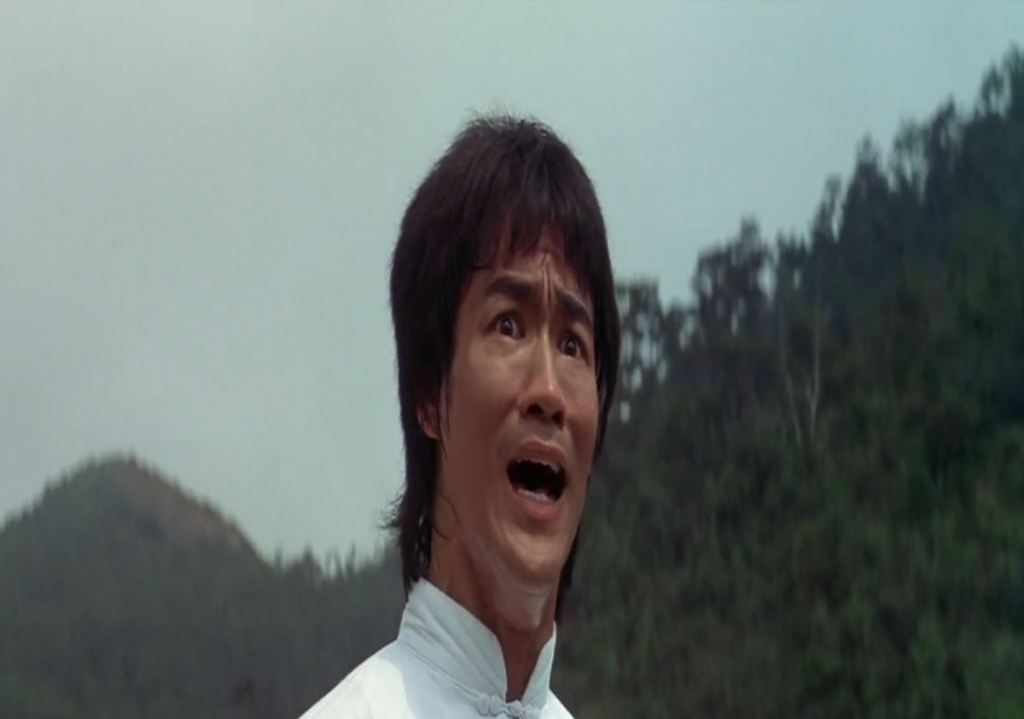
Enter the Dragon itself is a strange film which is built upon Chinese legends. The film combines different exploitation genres, freely mixing martial arts, spy films, old comic books, and adventure serials also sex and violence but stays true to its origins of Hong Kong martial arts film. There is also a connotation of ‘Chauvinism’ to the whole film, as most of the female characters utility is very odd because they serve as sex prize for the hyper-masculine lead characters. Only one female character stays true to the fundamental aspect of the old martial arts films which had female characters as the lead, paying homage to those women Lee’s elder sister commits suicide to save herself from getting raped from the hand of the villain Ohara, which drives the psychology of Lee to kill Ohara taking vengeance for his sister.
Lee started his career as a child actor in Hong Kong and then relocated to the States to create his own martial arts style which is very different from what is practised in Hong Kong. His style is more animated and exaggerated than his counterparts, his actions and movements are motivated by the camera rather than the fight therefore it makes use of the medium to portray his chiselled body and martial arts fighting movements. Upon his return to Hong Kong, he made three martial arts films: Big Boss, Fist of Fury and Way of the Dragon- all of which broke box office records and marked the revival of martial arts kung Fu into the mainstream film industry. It also succeeded in making Lee a legend all over the world, and his premature death meant that he would join the ranks of gone-too-soon martyrs like American actor James Dean and Chinese silent film actress Ruan Lingyu that the entertainment world loves to worship.
While many people say that ‘Enter The Dragon’ is merely a western influenced martial arts film, it can be considered as a proper Kung-Fu movie having several susceptible of attracting the Asian audience who had better knowledge of Bruce Lee from his previous films. For this type of audience continuity was privileged and the previous codes were respected. In the move the fight sequence are overwhelmingly present and the theme of revenge, also one of the main working elements of ‘Fist of Fury’- in which Lee avenged the death of his former instructor is also to be found in ‘Enter the Dragon’- the fight between Han and Lee starts only with the dialogue of Lee saying how Han has disrespected the Shaolin temple and his instructor. The classic climactic fighting sequence between Lee and Han in a room full of mirrors has been put into the hall of fame of martial arts films which has inspired many of the movies later made, but it draws inspiration from the Orson Welles classic ‘The lady from Shanghai’ in which the final scene also unfolds into to somewhat similar setting.
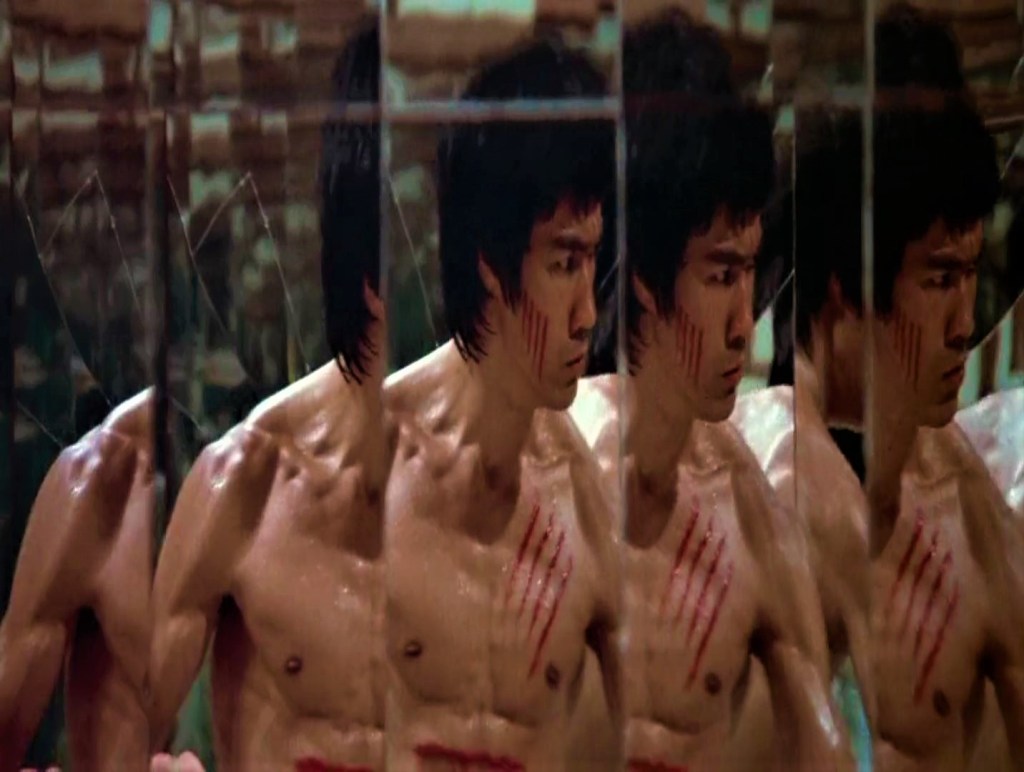
The movie can broadly be defined as the crucible of various genres including other element of the kung-Fu movie formula which was used to fish the attention of the western and eastern audience and a salvaged attempt to make Bruce Lee the immemorial figure of the action and martial arts cinema which he is still till date and keep on continuing being the Legend.
 Let's Talk About Cinema